
- Community
-
Programs
- Schools
-
Careers
- RN Specialties
- Best RN Jobs and Salaries
- Aesthetic Nurse
- Nursing Informatics
- Nurse Case Manager
- NICU Nurse
- Forensic Nurse
- Labor and Delivery Nurse
- Psychiatric Nurse
- Pediatric Nurse
- Travel Nurse
- Telemetry Nurse
- Dermatology Nurse
- Nurse Practitioner
- Best NP Jobs and Salaries
- Family NP (FNP)
- Pediatric NP
- Neonatal NP
- Oncology NP
- Acute Care NP
- Aesthetic NP
- Women's Health NP
- Adult-Gerontology NP
- Orthopedic NP
- Emergency NP
- Psychiatric-Mental Health NP (PMHNP)
- APRN
- Nurse Educator
- Nurse Administrator
- Certified Nurse Midwife (CNM)
- Clinical Nurse Specialist (CNS)
- Certified Registered Nurse Anesthetist (CRNA)
- Resources
- Education





 When I said some may be drug seekers in my post, I meant it in a general term as with any admission for any diagnosis with any patient. I, too, despise the reporting off to other nurses about their suspicions. When I hear in report that "they watch the clock and ask for pain meds on the dot" my response is "wow, they really must need their medication then because they are in pain".
 :madface:
 No worries!!


Lola77
102 Posts
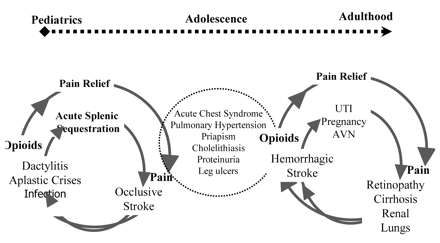
I work on a busy med-surg floor and recently have taken care of several patients aged 28-37 with sickle cell crisis. When I receive report from other nurses on these patients, it is always the same story - they say they are drug seekers and that they bring the crisis on themselves by getting dehydrated on purpose to make their retic count increase so they can come to the hospital and get drugs. Most of these patients are on lots of pain meds (sometimes a PCA plus breakthrough meds, sometimes PO plus dilaudid IV Q2h) and when I assess they appear to truly be in pain. I am a new nurse (5 months) and want to know your thoughts on sickle cell crisis. I tend to medicate them as much as they want (within order guidelines and if they appear in pain - I don't medicate them if they are sleeping etc, but if they call for meds and rate their pain above a 5 and it is time I will give them the meds). The night nurses get mad at me because then the patient is used to me giving them consistent pain meds and the night nurses tell me to make the patient wait for longer intervals.
I read up on sickle cell crisis and it seems like the pain would be crippling. Any insight on this? I desperately want to be a patient advocate yet at the same time I don't want to be a sucker/enabler for drug seekers. I don't see why a person would bring it on themselves?
Thank you!