Search Keyword
Topics About 'fnp'.
Displaying 128 results
-
-
-
I'm considering applying to GMU's MSN FNP program but wanted to get some insight into other people's experiences. I've tried to look elsewhere online, but haven't been able to find any first hand accounts. If someone who has attended or is currently attending could reach out, I'd really appreciate any insights you have. Do you feel supported by faculty? Did you attend fully online, hybrid or in-person and if so, what was the experience like? What are some pros and cons of the program? Did you have a hard time finding clinical placements? Or any other general thoughts you care to share about your experience would be great!
-
Hi everyone! Quick post- just wanted to give back to the community...when I was looking into various FNP programs that both fit my budget and had a challenging curriculum, American Sentinel was one of the schools that I looked into. Unfortunately, although I could find decent information regarding their RN-BSN program, there wasn't much about their FNP program. It took me months of speaking with them, going through the catalog and finally occurring to me to look at the profiles of NPs on LinkedIn that graduated from American Sentinel to make a final decision. So, even though I don't start my first class until February 17th, I thought I'd just throw this out there in case anyone has questions later on as I progress through the program?
-
 New Jersey FNP Key Takeaways:Top-Tier Accreditation: Our list features CCNE-accredited programs from elite institutions, ensuring your degree meets the highest national standards for clinical quality. High Earning Potential: New Jersey NPs earn an average of $140,470 annually, significantly outperforming the national average for primary care providers. Hybrid Flexibility: Most top-ranked schools, including Rutgers and Ramapo College, offer hybrid formats that blend online didactic coursework with local clinical placements. Fast ROI: With affordable tuition options at state schools like William Paterson, many graduates reach a financial break-even point within their first year of practice. Career Growth: The BLS projects a 35% increase in NP employment through 2034, positioning FNPs as the backbone of New Jersey's primary care future.
 -
 Quick Glance: Top FNP Programs in FloridaFlorida is a premier destination for advanced nursing, offering some of the nation's most affordable and high-ranking Family Nurse Practitioner (FNP) programs for 2026. With top-tier institutions like the University of Florida, University of Miami, and FSU, students can access CCNE and ACEN accredited hybrid paths that balance clinical rigor with flexibility. In a state with no state income tax and a high demand for primary care, Florida FNPs enjoy a median annual wage of $114,352 and a rapid return on investment. Florida FNP Top Takeaways:Ranked Excellence: The University of Florida is the #1 nursing school in the state, offering an A- ranked hybrid MSN-FNP program. Budget-Friendly Education: Florida leads in affordability; programs at FSU and FAMU feature tuition as low as $5,600–$5,800, allowing many to break even in their first year of practice. Career Growth: The BLS projects a 35% increase in APRN employment through 2034, driven by Florida's large retiree population and primary care needs. Clinical Standards: Accredited programs ensure students complete 500–750+ clinical hours, preparing them for national certification via the ANCC or AANP. Financial Support: Leverage the Florida Health Service Corps for loan repayment when practicing in high-need areas across the state.
 -
 Advancing from a Registered Nurse (RN) to a Family Nurse Practitioner (FNP) is one of the most lucrative and professionally rewarding decisions you can make. However, choosing the right program requires more than just looking at a school's name. You need to look at the data. To help you navigate this transition, we analyzed the top universities in Michigan through the lens of "Success Intelligence." This means we prioritized return on investment (ROI), clinical placement support, and NCLEX/certification pass rates over generic institutional prestige. According to the American Association of Nurse Practitioners (AANP), state legislation heavily dictates your daily workflow, so choosing a program that prepares you for Michigan's specific healthcare landscape is vital. Snapshot: What You Need to Know Before ApplyingBefore diving into the program rankings, here is a quick glance at the current FNP landscape in Michigan: Average RN to FNP Salary Bump: Michigan RNs earn roughly $80,000 annually, while FNPs average $125,900. This is an average gross salary increase of $45,900 per year. Practice Environment: Reduced Practice. You will need a collaborative agreement with a physician to prescribe certain controlled substances. Average Break-Even Point: Depending on the school, it takes between 1 to 3 years of working as an FNP to completely offset your tuition costs using your new salary increase. Clinical Placements: The biggest hurdle for online FNP students is finding clinical preceptors. Prioritize schools that actively match you with local Michigan clinics.
 -
 Stepping into the role of a Family Nurse Practitioner in New York is a high-stakes, high-reward career move. With shifting healthcare policies and an aging population, FNPs are stepping up as the primary healthcare providers for thousands of residents. However, choosing the right educational pathway requires more than just looking at a school's name. You need "Success Intelligence": a clear understanding of tuition ROI, clinical placement logistics, and how state laws impact your future practice. According to the American Association of Nurse Practitioners (AANP), NPs are vital to closing the primary care gap. In New York, the stakes are especially high due to recent legislative changes granting greater autonomy to advanced practice nurses. Quick Glance: The New York FNP Landscape in 2026 Before diving into program specifics, here is a snapshot of what you need to know about pursuing an FNP in New York: Average FNP Salary in NY: ~$140,010 to $148,410 annually. Job Growth: Projected 35% nationwide increase by 2032. Practice Environment: Evolving. New York requires new NPs to have a collaborative practice agreement for their first 3,600 hours, after which they can achieve Full Practice Authority (FPA). Top Educational Formats: Hybrid learning (blending online coursework with targeted on-campus intensives) is the most prominent delivery method for New York FNP programs. Below is our peer-verified, data-driven ranking of the top 10 FNP programs in New York, designed to help you mitigate debt risk and accelerate your career.
 -
 Advancing your career from a Registered Nurse (RN) to a Family Nurse Practitioner (FNP) is one of the most lucrative and empowering decisions you can make in modern healthcare. However, not all degrees offer the same return on investment. The transition requires a deep look at clinical placement support, accreditation, and out-of-pocket costs. To help you navigate this transition, we have evaluated the top-performing institutions in the state. According to the California Board of Registered Nursing (BRN), the demand for primary care providers is outpacing supply, creating unprecedented leverage for advanced practice nurses. Our "Success Intelligence" methodology ranks these schools not just by prestige, but by how quickly your investment will pay off in the real world. Snapshot: California FNP Programs at a Glance Before committing to two or three years of rigorous study, you need to understand the financial and professional landscape. California is currently undergoing a massive legislative shift that directly impacts the value of an FNP degree. We built this guide to answer the real questions you have: Will this program find my clinical preceptors? How long will it take to pay off my student debt? Is a cheaper, online program viewed favorably by top-tier healthcare employers?
 -
 Selecting the right Family Nurse Practitioner (FNP) program in Georgia is a high-stakes financial and professional decision. You are not simply buying a degree; you are investing in a license, a professional network, and clinical competency. To ensure your success, you must look beyond glossy brochures and focus on "Success Intelligence" metrics: certification pass rates, clinical placement support, and true Return on Investment (ROI). According to the American Association of Nurse Practitioners (AANP), Georgia remains a Restricted Practice state, meaning your networking ability during clinicals is vital for securing a collaborative physician post-graduation. Quick Glance: The Georgia FNP LandscapeBefore diving into program specifics, here is a snapshot of what you are stepping into as a future FNP in the Peach State: Average FNP Salary in Georgia: ~$127,976 annually ($61.50/hour). Average RN Salary in Georgia: ~$75,000 annually. Salary Differential: Becoming an FNP yields an approximate gross income increase of $52,000 per year. Practice Environment: Restricted. You must have a written collaborative agreement with a physician to practice and prescribe. Demand: Extremely high. Over 100 counties in Georgia are designated as primary care shortage areas.
 -
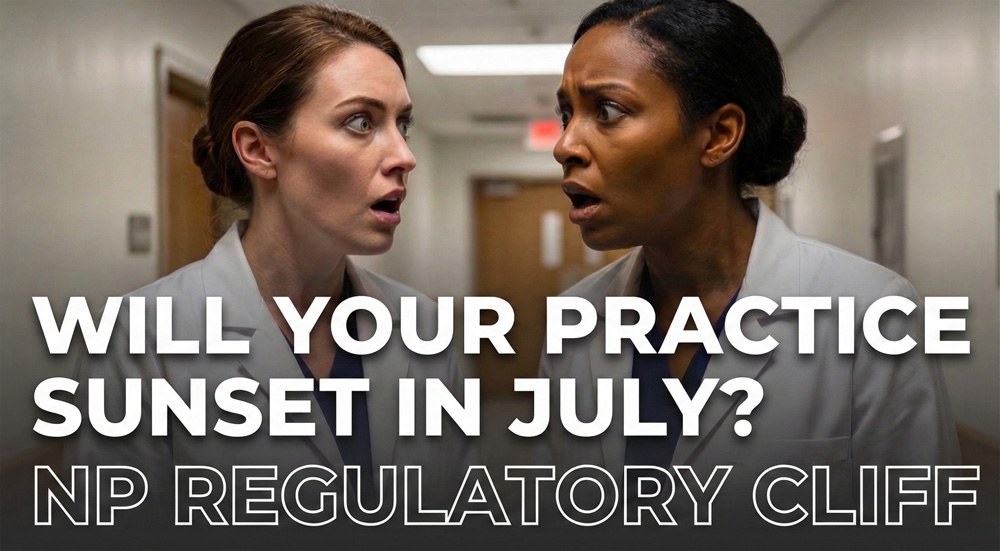 The "Independence Day" for California: The 104 NP ArrivesThe biggest story of 2026 is unfolding in the nation's most populous state. For years, California NPs have operated under the restrictive "standardized procedures" model. However, as of January 1, 2026, the Board of Registered Nursing (BRN) began accepting applications for 104 NP certification. This is not just another credential; it is the "Final Frontier" for California autonomy. Under AB 890, NPs who have completed a rigorous 4,600-hour "Transition to Practice" (approximately three years) and held a 103 certification can now practice entirely without a physician on-site or a formal "group setting" requirement. For the first time, California NPs can: Open solo private practices. Contract directly with commercial and government payors. Structure their own business entities without physician-led corporate hierarchies. The New York "Sunset" CrisisWhile California celebrates, New York is bracing for a potential disaster. In 2022, the state temporarily eliminated the requirement for experienced NPs (3,600+ hours) to maintain written collaborative agreements. That provision is set to sunset on July 1, 2026. If the New York State Legislature fails to pass Bill S2360 (which would make this independence permanent), thousands of veteran NPs will be legally forced to find a physician "supervisor" or stop seeing patients overnight. The Nurse Practitioner Association of New York State (NPA) has warned that this "regulatory cliff" could disrupt care for hundreds of thousands of patients in already underserved areas.
 -
 If you are a registered nurse looking to advance your career, increase your autonomy, and substantially boost your earning potential, becoming a Family Nurse Practitioner (FNP) is one of the most strategic moves you can make in 2026. According to the Texas Board of Nursing, the demand for advanced practice providers continues to surge as population growth outpaces primary care availability. However, with tuition costs ranging from affordable state options to premium private institutions, choosing the right program is critical to your financial future. In this comprehensive guide, we move beyond a simple list of schools. We evaluate the top 10 FNP programs in Texas based on genuine "Success Intelligence" factors, including graduation rates, true cost of attendance, and a specialized "Break-Even Point" analysis. This helps you understand exactly how long it will take for your new $132,000 FNP salary to pay off your degree. Snapshot: Texas FNP Programs in 2026 Before diving into the detailed rankings, here is a quick glance at what the FNP landscape looks like in Texas this year: Average FNP Salary in Texas: ~$132,000 per year (approx. $63.46/hour). Average Tuition Range: $10,000 to over $90,000 total. Program Length: 18 to 36 months, depending on the BSN-to-MSN or BSN-to-DNP pathway. Practice Environment: Restricted Practice. Texas FNPs must maintain a Prescriptive Authority Agreement (PAA) with a collaborating physician.
 -
Hi all! I am graduating from FNP school this December and I am starting to look into study materials for the ANCC FNP board exam. Was curious if anyone has any recommendations for review courses or study material? Looking for some advice from people who have taken the exam ! Thanks everyone ?
-
First and foremost, I understand that everyone's situation is different and that we all don't learn/study the same way. I just wanted to share my experiences with the entire process of actually finally being able to pass my boards. I completed my FNP program in December when I was about 33 weeks pregnant. I was too stressed from school and having poorly controlled blood sugars and being diagnosed with gestational diabetes, I did not take the boards right away. I'm still not sure if this was the right decision to make. Anyhow I had my first born in January, and having postpartum depression and anxiety, I had a hard time focusing. My husband then got a job in California, so we relocated there that Summer and it took about 5 months to get my license endorsed. With the cost of living in Los Angeles being so high, I again postponed taking my boards and opted to work instead, night shift so I could save a couple of grand from having to put my infant in daycare. Hollier's APEA Online Review Course Feeling lonely, still having postpartum depression and living in a city that I was still new to, I continued to feel isolated but wanted to desperately move on with my career and "be someone" that I could be proud of. I decided to take Hollier's APEA online review course and listened to her and printed out her notes. I tried to listen to her while at work and while at home but for some reason I just could not absorb the information. The review course itself was a wealth of information and it was sometimes overwhelming to listen to her. I listened to her maybe once and read the notes 2-3 times reviewing it. Maybe it was because I had been out of school for so long, maybe that's why I wasn't learning so well? I'm not sure. I should also mention I have major test anxiety and always got time and a half as an undergrad because that is how debilitating my anxiety was and still is. I also didn't pass my NCLEX until second time around. I did not do as many practice questions as I should have. In fact first go round I don't remember doing any practice questions. I did purchase a PSI practice exam which I scored terrible on (50's). That cost $50. I finally scheduled my exam and failed it with a disappointing but not surprising score of 358. Oh I forgot to mention that I found out I was also 12 weeks pregnant second time a few weeks before the exam and I was so exhausted from work, taking care of a toddler that there was no way I could study for the exam. After failing the first time, I decided to do my research and look up exactly what I needed to do to retake this exam. It took me about 3-4 weeks to listen to all the CEU's and take the test that was required. All of the CEU's were free and offered by the AANP. I could not use the APEA review course as CEU's because I took the course before the exam date. Liek's Review Book I started trolling these forums again looking up study tips on how to study and what resources to use. I decided to buy Liek's review book because apparently that was the book to use. I did not go back to listen to Amelie's APEA but revised her notes. I also purchased the FNP mastery questions and reviewed those questions on my phone. I scored terribly on them. I made a study sheet with some nmemonics for CN's, and made some charts on stuff I didn't understand (CN, asthma, COPD, htn, ect.). I didn't read Leik's Book and just used it for her practice question. I read the first chapter on exam tips. I put all of Amelie's notes onto index cards. I reviewed those index cards (prob well over 100), made a cheat sheet that was prob one page written front and back and did all of Leik's questions (725). Although I memorized all of them, I still had crazy anxiety. I went to my doctor and she wrote me a note for extended time which I faxed over to PSI. I then reviewed the first exam I had purchased from PSI for the first time I took the exam. I probably maybe spent an hour or so reviewing materials and doing practice questions on the FNP mastery app and the Leik's book. All of the questions I got wrong from the FNP mastery app, I wrote them all and made them part of my study/cheat sheet. I bought 10 exam edge practice exams and scored 450-480 on them first try. I finally scheduled myself to take the exam again, this time 3 weeks before my second baby was to be born. I was about 36 weeks pregnant and determined to pass this gosh darn exam before this baby was born. I went in and got my time and a half but failed again. This time by 7 points. I scored a 453. I wrote down some of the nmemonics I memorized and used the "marked" option. I don't even remember marking a lot of questions. And all the ones I stumble on when I came home to look up the answers, I had them right. I don't know where I went wrong. Second time around I found that Leik's questions were very similar to the ones written on the exam. But I did not do well with... 1. Process of elimination 2. There was some information that I just did not know. I felt so terribly disappointed in myself I just did not know what to do. I decided to start doing the CEU's again right away, but when I called AANP they said that I had to wait at least 24 hours before I started to do the CEU's. I waited the 24 hours and decided to start doing the CEU's again. I printed them all out and organized them. I decided to give myself a little bit of a break but continue to read casually. I decided that I would study during my maternity leave. I had my baby and June, started going through post partum depression again and on top of that I had a toddler at home who wasn't going to let me accomplish anything. Luckily my CEU's were done. I had already finished Leik's questions once I decided to finish them again. Someone mentioned that Amelie's APEA certification questions (3rd edition) was excellent. So I bought this also. I still had my exam edge questions (the 10 I had previously purchased, bc u can take them 3 times). I had my daughter in June and decided to start studying again. This time around I read Leik's book. I decided that I could not study with my toddler at home, so I put her in full days at preschool (she's 2). She went to school from 8-5. My newborn was with me at home and I nursed her every 2-3 hours. Study Schedule I trolled these forums again. I Also decided to Start from scratch with studying. I didn't fully start to immerse myself into studying and focusing until a couple of weeks after my daughter was born. I made myself a kind of study schedule. I would fully commit to reading every chapter in that book. Which is exactly what I did. It took me about 2 days to finish each chapter in Leik's book. I bought colored gel pens to make studying fun. And also some computer paper with no lines (like the scratch paper they give u during the exams). I did Leik's practice questions again. This time I tried my best not to memorize the answers. It's so easy to memorize the answers. Instead I would write down why I got it wrong or why it was the right answer. I would flip to back to the chapter and read about it. It took me a month to finish Leik's book. I finished her book in the beginning of August. With Amelie's book, I did every single question in there except for the adult Geri practice exams. Again with Amelie's practice questions, I wrote down why the answer was right (for questions I got Wrong). After writing all of the answer and rationales down to all of the questions I got wrong, I started creating charts and ways to memorize certain body parts or guidelines, STD's, vaccine requirements, TB, cancers, treatments and antibiotics and vocabulary. I took pix of the notes so I can read them in bed or while nursing my daughter. I read Leik's book again and did her practice questions again. I read her book a total of 3 times and did her study questions a total of 4-5 times. I obviously read it faster each time. I did Amelie's questions a total of 3 times. I spent probably 5-6 hours studying and reading a day. I sent in my re-take paperwork in August. Two months before scheduling my exam I bought another PSI and scored 75. I repurchased the one I bought first time around and got an 88. I also decided to spend a little more time on pharmacology, drug side effects and interactions. I made a new study sheet on that. I also didn't use any of the index cards I made previously because regurgitating the information was not helpful to me. I also bought an hour session tutorial with Prepping For FNP Certification. She kind of told me what I needed to know for the exam and shot some questions at me. It was $75/session. She didn't give me real pointers but helped me realize what I should focus on. Also explained to me some things I needed differentiating on (different anemias). I finally decided to schedule my exam the week before Halloween. You can only take it twice a year so I definitely had to take it before December just in case I failed and had to take it again in January. I scheduled it for this past Friday (second week of November, November 9). Asked my husband to take the day off. He was great and decided to take 3 days off so he could help with our baby who is exclusively breastfed, while I study. I decided to make myself a 2 week calendar of what I was going to review. The past 2 weeks I only did practice questions from Leik's and Amelie's book. Third time around I did not use the FNP mastery app at all although some of my notes already contained info from the app. I also did about 5 exam edge exams scoring 530-611. I finally decided to buy Amelie's predictor exam feeling confident that I would score >70%, which I did not. I scored 67, putting me at risk. Nevertheless, I took those questions I got wrong and looked up information on it. Four days before the exam I copied my notes for each system. The night before the exam I read over any topics I was not sure of. I did not get a good night's rest the night of the exam because my daughter still nurses every 3-4 hours and my toddler now has night terrors. I also reviewed the 2 PSI's I purchased the night before. Test Time I scheduled my exam for 0830, wrote out directions for my husband on what to do for our girls. Grabbed a latte and a sandwich from McDonald's before driving to the testing site. I listened to some relaxing music and got there at 0745. I walked in and started as soon as I sat down. I did not write down and mnemonics except for the cranial nerves (which I got no questions on) I also did not get any questions on hepatitis. I got one heart murmur question and maybe a handful of pediatric questions. I surprisingly got NO question on contraceptives which I was happy about because it is one of my weak areas. I finished at about 11:30. I used the "marked" button but only marked 2. I probably had about 10 questions I felt iffy about. The others were either straight forward, or I used process of elimination. In fact I got a lot of questions that were either similar to Liek's or questions I remember from the second time I took the exam. One thing I did do was write down key words from the questions on my scratch paper to help me identify the stem of the questions. Words like "except", "ALL but which", to make sure I would not choose the wrong questions. I wrote down key characteristics each patient had in the question to help me pinpoint what the test was actually asking me. After 3 grueling hours I received s preliminary "passed". I am so ecstatic about finally moving on with my career and focusing on my health and happiness with my family. I should be getting my scores in the next week or two and can update this post then. Thanks to all of you who shared your study experiences and to those of you who picked ourselves right back up after falling. You really helped me to focus more and work harder! Also, please don't hesitate to contact me if you need any study tips. I'm more than happy to help! I understand this struggle too well now.
-
 If you are a registered nurse (RN) looking to elevate your clinical impact and autonomy, becoming a Family Nurse Practitioner (FNP) offers one of the most versatile career paths in modern healthcare. An FNP is an Advanced Practice Registered Nurse (APRN) who serves as a primary care provider for patients across the lifespan. In 2026, the demand for these professionals is higher than ever; according to the Bureau of Labor Statistics, employment for nurse practitioners is projected to grow much faster than the average for all occupations. This guide covers everything from the "MSN vs. DNP" debate to the realities of autonomous practice and salary expectations. Quick Glance: The FNP Role in 2026Average Salary: $120,000 - $145,000+ (varies by state/experience). Education Required: Master of Science in Nursing (MSN) or Doctor of Nursing Practice (DNP). Licensure: National Board Certification (AANP or ANCC) + State APRN Licensure
 -
 More patients are presenting with comorbid physical symptoms and mental health struggles, creating a critical need for providers who can care for both. According to the National Council for Mental Wellbeing, the integration of primary and behavioral healthcare is the gold standard for 2026 and beyond. Dual-certified Family Nurse Practitioners (FNPs) and Psychiatric-Mental Health Nurse Practitioners (PMHNPs) are uniquely prepared to meet this demand. These programs train nurses to treat the whole person, whether managing diabetes or recognizing early signs of PTSD. You might find yourself in a community clinic helping a teenager navigate panic attacks following a sports injury. Dual FNP/PMHNP programs cover both primary care and psychiatric training in a single track. This guide explores top programs for 2026, breaking down coursework, clinical hours, and admissions. We also cover tuition, salary potential, and certification routes. If you are looking to expand your impact without sacrificing one part of your calling, this guide is for you. 2026 Quick Glance: Dual CertificationAverage Program Length: 3 to 4 years (DNP/MSN tracks). Clinical Hours: Typically 1,000 to 1,500 hours (Split between Primary Care and Psych). Average Salary: $135,000 - $160,000+ (varies by state and practice setting). Top Benefit: Ability to bill for both medical management and psychiatric services (Integrated Care). Ideal For: Nurses in rural areas or those passionate about holistic "mind-body" medicine.
 -
 A 12-month FNP program sounds appealing, especially if you want to move into practice sooner. In reality, these timelines are rare and usually apply only to specific pathways with year-round terms. This ranking explains what "12 months" actually looks like on a real calendar, including where delays tend to happen. You'll also see how online coursework, clinical placement, and preceptor timing can make or break an accelerated plan. The goal is simple: help you compare programs with fewer surprises.
 -
 Key Takeaways: Top Dual ProgramsUniversity of South Alabama: Best for fully online didactic coursework. University of Iowa: Best for 100% certification pass rates. University of Tennessee Health Science Center: Best for affordability (In-State). Rockhurst University: Best for a streamlined, integrated online dual track. University of Arizona: Best for DNP prestige and academic ranking. Madonna University: Best for a values-based, holistic curriculum. Colorado State University-Pueblo: Best for Post-Masters certification.
 -
My time to share and close an end to this long journey to become a FNP is finally here! A few weeks ago I searched this forum with hopes to find some recent words of wisdom, but I came up empty handed. I did find posts talking about failing their first attempt and I started to get into my head. However, I just focused on the process of studying and did not let that deter me. I come bearing words of encouragement and will share my study strategies to help others on this journey. First, YOU have come so far, and if you do not pass the first time, do not let this bring you down. If you're taking the AANP exam, I HIGHLY recommend purchasing their most recent practice exam for $50 on their website. This layout is the EXACT same on exam day, so don't go changing the colors around. Become familiar with it and navigate it thoroughly, so come exam day it is one less stressor you have to deal with. I recommend sticking to only a few brain dump items and jot these down during your 15 min "tutorial" of the exam. You won't have to go through the tutorial, since you already did that with the practice exam. If you happen to read this and you are just starting school, purchase the Comprehensive FNP review book by Leik. I believe the 5th edition is the most current and get a NEW book with the study flash cards. There is a study link in the front cover, do NOT activate this until you are 6 months from when you want to take the exam. I personally used Leik during my entire program for supplemental information. For daily study questions, download FNP Mastery. Just do the free 11 daily questions until you are one month from taking the exam, then purchase the monthly subscription for ~$40. Lastly, purchase the Crash Course Review by Sarah Michelle NP Review and get her PDF book with it as well. I listened to her lectures over and over again. Another great resource is Brittani Holsbeke on Patreon. I found her lectures easy to follow and touched on things I wasn't educated well in school. When you are ready to study, schedule your exam with at least 3 weeks for prep. Focus on 2-3 sections per day, with each one taking 2 hours each. You can create a customized study plan on ChatGPT as well. Review each section with questions and review things you didn't understand the following day. I suggest finding the areas you are weakest in and do those first and review those everyday. PRACTICE QUESTIONS! Do as many as you can tolerate each day, but aim to be able to complete at least 50-75 without taking a break. Do multiple 150 practice question sessions with short breaks every 50 questions. Complete at least TWO "test-day" simulations. I used a brain dump with high priority (e.g. cranial nerves, murmur mnemonics, antibiotics, asthma), but I did NOT even use it. That being said, if you WERE to make one, only put things that you easily mix up. The night before I just relaxed. I went out to dinner, did short review of my poster hoarding high priority items, and rewrote my brain dump several times. Make sure you get plenty of rest, caffeine, food, and water the morning of the exam. Also, make sure you check out the location several days prior and leave so you get there with 30 mins to spare. I hope this helps someone who needs a little guidance through all of the study material out there or just provides some support during this challenging time! YOU WILL PASS!
-
I am trying to gain feedback regarding those that went and completed their MSN in the nurse practitioner program at William Paterson University in NJ. How they perceived the program prior to starting, compared to how the experience was for them during the degree.. Students in the NP program at this school are welcome to share how they are going through their specialty routes.. Any feedback is much appreciated!
-
I am looking at several FNP programs in Alabama, but can't find much on the University of North Alabama other than the website. Has anyone heard anything about the FNP program? It is very affordable ($12,900 tuition), not for profit, and CCNE accredited, so I am wondering why this school's masters program is not discussed on here. Does it have a bad reputation? Thank you for any insight or information!
-
 Thinking about pursuing a career as a nurse practitioner? Explore our rankings of the best NP programs based on specialties, empowering you to make an educated decision. Customize your educational journey to match your career goals, and let our rankings steer you towards a choice that leads to success.
 -
 If you want to learn more about the best Family Nurse Practitioner (FNP) programs in Colorado, check out our list below, along with information about the role, responsibilities, and career outlook. Whether you're a practicing registered nurse (RN) seeking to advance your career, or generally curious about the profession, you've come to the right place.
 -
 If you want to learn more about the best Family Nurse Practitioner (FNP) programs in Arkansas, check out our list below, along with information about the role, responsibilities, and career outlook. Whether you're a practicing registered nurse (RN) seeking to advance your career, or generally curious about the profession, you've come to the right place.
 -
 If you want to learn more about the best Family Nurse Practitioner (FNP) programs in Illinois, check out our list below, along with information about the role, responsibilities, and career outlook. Whether you're a practicing registered nurse (RN) seeking to advance your career, or generally curious about the profession, you've come to the right place.