C_AlexanderRN
New Member
-
Joined
-
Last visited
-
Alarm Fatigue We have all experienced a stretch of shifts where alarms are constantly blaring off. You go home and sometimes even wake up from a nightmare with those alarms beeping in your head. Ugh! Here are some tips nurses can use to overcome alarm fatigue: #1 Identify the underlying cause of the alarm. Use your good ol’ fashioned critical thinking skills to uncover why your patient is beeping off. Are they paced? Maybe you need to change your tele settings to a paced mode. Are they having frequent PVCs, bigeminy, trigeminey? Maybe you need to ask the provider to buff up their lytes. K should be>4, Mag>2 if you are worried about arrhythmias. Anticipate hypoxia? Bump up the O2 before repositioning your patient whose sats drop when you lower the head of the bed. #2 Feel empowered to speak up to providers. Does your patient who is experiencing skin breakdown really need telemetry leads and O2 sat monitors? Does your patient who has a history of OSA and is compliant with their CPAP need continuous pulse oximetry? Your patient with chronic A fib is transitioning towards comfort care and refuses electrolyte repletion. Is monitoring their ectopy necessary? Often times providers are not aware that the alarms are even beeping or troublesome to patients and nursing staff. They are writing orders according to checklists and algorithms. If you have a conversation with the team and explain your rationale, you will probably be (happily) surprised to hear that continuous monitoring is not necessary for your patient. #3 Get creative! Are you having trouble getting a good O2 sat waveform? Are your patient’s fingers cold? Try using a heating pad to warm them up. Is your patient delirious and pulling off the probe? Try putting a sticky probe on their toe. Maybe you have an ear probe available on your unit…or maybe you can borrow one from another unit. Nursing takes a village. Reach out to your colleagues and resources whenever possible. Don’t worry about asking “dumb” questions. No questions are dumb if you learn something by asking them. And remember that every senior nurse started out as a new grad at one point. The only way to learn is by asking questions and through trial and error. Good luck out there! Hope your unit gets a little quieter after reading this ?
-
I've been an Oncology nurse for my entire career...11 years as an RN and 1 year as a nursing assistant during nursing school. I LOVE Oncology! You see many of the same patients over the course of months, or years, and develop close bonds. Oncology patients teach you strength, perseverance, and remind you not to take anything for granted. Onc patients rely on nurses to be their advocates when they are most vulnerable. A good oncology nurse needs to be a skillful listener who can gently offer suggestions and help guide conversations especially at the end of life. We are often the ones who stay behind in the patient's room after a family meeting, explaining what the provider said. Your critical care experience is perfect for the Oncology population! Onc patients can be highly acute, and their hemodynamics can change on a dime. You need to be able to manage sepsis, bleeding, clotting, LOTS of tubes and drains, wound care, and common side effects of cancer treatment (constipation, diarrhea, N/V, infection, myelosuppression, mucositis). Best of luck!
-
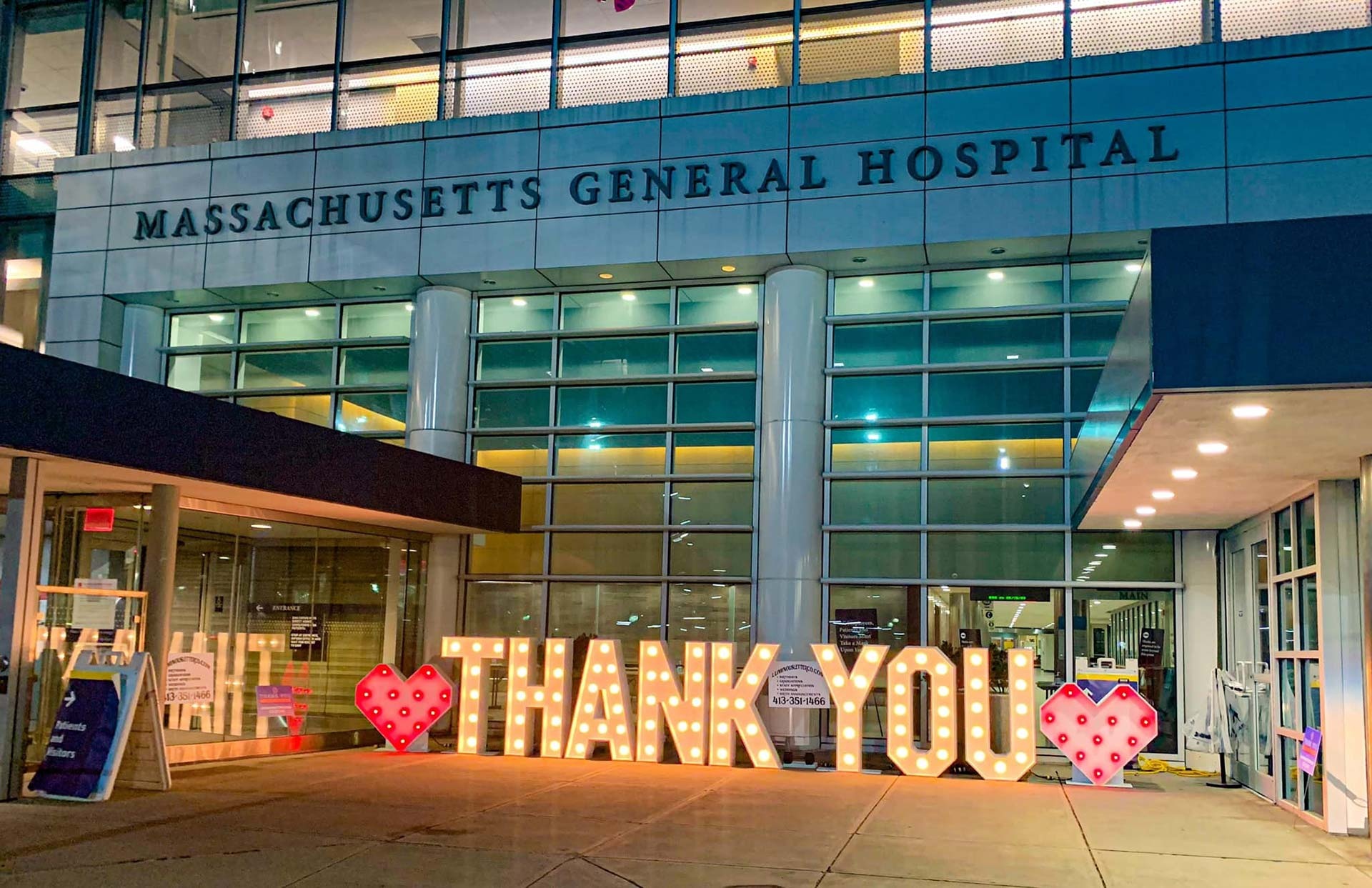
Shifting roles and responsibilities During the COVID-19 pandemic, my role and responsibilities quickly shifted from caring for only adult oncology patients, to medical patients, to ICU patients on ventilators. The challenges of learning how to care for these patients also provided an opportunity to experience a type of nursing I probably would have never experienced otherwise. In some of our first days as a COVID-19 ICU floor, I cared for two patients with COVID ARDS. Both of these patients had similar comorbidities: DM, HTN, HLD. One pt was in his eighties, and one was in his fifties. The patients with ARDS in our COVID ICU were very similar in terms of treatment approaches, sedation cocktails, vent settings, and pressor requirements. Having patients with very different backgrounds, but the same reason for ICU admission, reinforced the learning points for me. Every patient was approached systematically Their sedation and RASS scores were first. Dilaudid (until supplies grew thin, then switched to Fentanyl), Propofol (tubing changes every 12 hours!), Versed, Ketamine, Dex (a new kind) in some combination. Then came their recent gases, P:F ratio, vent settings, plan for prone vs supine, length of intubation. Then hemodynamics: pressor requirements (do they “like” the Vaso?, do they try to die on you when you change out a stick of Levo?), telemetry review, many patients with QT prolongation, CRP, Ferritin (numbers I’m familiar with, but no CAR-T cells in sight), clotting issues. GI/GU: tubes, tubes, and more tubes. What’s their tube feeding formula and rate goal? Does their Flexiseal leak? Do we have any bags today or do we need to become a mechanical engineer to empty the bag in the toilet? Is the skin intact? Do they have swelling and DTIs from proning? Do you have the cute infant gel pillows in the room? You worked so hard for twelve hours, documenting every drip, vital sign, vent setting (if they didn’t flow into Epic), you did mouthcare and repositioning every 2 hours and worried every time you interacted with the patient’s mouth, thinking of the constant viral shedding. You spent so long setting up the ipad just right so you could see your patients’ waveforms on the monitor, then the IV pole got bumped by someone quickly going by to empty the trashcan- probably holding their breath while they did it. You wanted to be a good nurse ... ... and, you wanted to take the time to really wash your patient’s matted hair, but you also counted the hours the N95 had already been on your face, and you started to think about retaining your own CO2, and how thirsty you were, and did you pee today? I hope I have a really good seal on my face. Will the patient even survive this? The next hour is approaching…we need to do our hourly documenting. It’s time for another full head to toe assessment. And, this nurse likes you to document a RASS score hourly. Will this nurse trust me to draw the ABG on my own? I’ve done it a bunch of times now. This partnership is amazing. This nurse trusts me. I can manage a patient with an ET tube. Lunch is being delivered today. The kids in the neighborhood drew chalk messages of hope and thankfulness for healthcare workers. A patient graduated from the ICU and moved to the yellow side. A patient is walking in the hall! My patient… that patient from the beginning, that patient who was proned 4 times, that patient who was extubated, then had to be re-intubated, then had to be trached and PEG’d…he sat up in the chair and Zoomed with his grandchild, while on room air. This is pandemic nursing. This is Lunder 9.
-
I work in an inpatient setting where we routinely administer clinical trials and monitor patients after some phase 1 drugs. Each protocol is very different in terms of which rescue meds are "allowed" and even the grading system used. There is a flowsheet built into EPIC that we use called IEC score. We routinely check ICANS/ICE scores in patients, especially those receiving CAR-T cell therapy. Attached are a few CRS grading tables with associated interventions. Tocilizumab is usually given if patients have Grade 2 CRS refractory to other supportive care measures (I.e. NS bolus for HoTN). Giving Toci sooner rather than later can save the patient a lot of unnecessary discomfort in my opinion. Toci has not been shown to decrease the efficacy of CAR-T cells. Toci has the potential for hypersensitivity reaction, so it is good practice to have an anaphylactic kit at the bedside when you are giving it.