Search Keyword
Topics About 'ccmc'.
Displaying 8 results
-
Authored by Vivian Campagna, MSN, RN-BC, CCM, chief industry relations officer (CIRO) for The Commission for Case Manager Certification for CCMC My work as chief industry relations officer at the Commission for Case Manager Certification doesn’t involve day-to-day case management or even supervision of case managers. But it’s funny how being a certified case manager becomes part of your being. As an experienced case manager, I have the ability to help people understand their needs and preferences, navigate through the complicated maze of our health care system and access the resources they need for optimal health. And as a certified case manager, I embody the knowledge, capability and skill required for the role. Friends and colleagues trust me to help them along their path to self-management, self-advocacy and recovery. I am bound by high professional standards and a code of conduct. Those three letters behind my name validate my qualifications to employers, providers and peers. As the Commission approached its 25th anniversary as a certification body for case managers, we sought out seasoned case managers and asked them why, even beyond their retirement years, they maintain the continuing education and renew the credential. What we hear strengthens my personal and professional understanding of the value of the credential to make us a “better case manager, a better YOU.” Today, it’s my desire and my dedication to see a growing, diverse cadre of case managers achieve certification and earn the peer, employer and client respect it engenders. The Commission’s research and commitment to ensure the exam remains practice-based and relevant also supports a health care industry motivated to employ knowledgeable, qualified case managers. That ongoing commitment positively impacts the hopes, dreams and careers of more than 45,000 board-certified case managers. The numbers support the relevance of the CCM. Our recent survey of CCMs found Salaries are on the rise for those who are board certified, with the median salary between $80,000 - $85,000 annually.88% say certification has had a positive impact on their career.94% have recommended the CCM to other case managers.Employers recognize the importance of the CCM by paying for the exam or renewal and often requiring the credential.Supervisors who are CCMs highly prefer hiring those who are certified.Are you ready to join the more than 45,000 certified case managers who have a lifelong, fulfilling career they are proud to renew for decades? If the answer is yes, review the eligibility requirements to become a better case manager, a better you!
-
 Written by MaryBeth Kurland, MPA, CAE, ICE-CCP CEO, Commission for Case Manager Certification In June, the Centers for Medicare & Medicaid Services (CMS) launched its newest innovative health care delivery model, Making Care Primary (MCP). The team-based care approach seeks to address complex health needs in the context of whole-person health. That includes evaluating and addressing identified health-related social needs—housing, food security, and behavioral health among them—and ensuring that covered individuals benefit from care coordination—what CMS calls "full care transformation.” CMS' new model is only open to primary care practices in eight states at this early stage, but its 10.5-year roadmap anticipates a future with much broader adoption. That's because CMS is launching MCP with confidence that it will produce great outcomes. A recent report from the Department of Health and Human Services cites the evidence for positive impacts from holistic care models that address social determinants of health (including behavioral health), especially for those with chronic conditions. Whether it's coordinating health care alongside help with housing, food, or transportation, studies show that keeping the person at the heart of collaborative care improves health outcomes and lowers cost. For case managers, this notion of "full care transformation" is quite familiar; it's simply keeping the person-centered approach to their client's care—a perspective they bring to their role every day. Collaboration can truly be transformative. This year, the Commission for Case Manager Certification (CCMC), the Case Management Society of America (CMSA) and the American Case Management Association (ACMA), have joined together as one voice to champion case managers as advocates, navigators, and change agents. During National Case Management Week in October, our organizations are united in spotlighting the important role case managers play on the health care team with the theme, "Keeping the Person at the Heart of Collaborative Care.” Together, we are raising awareness about case managers and the value of teamwork and partnership in ensuring optimal health outcomes through coordinated, whole-person care. Our united voices are a powerful demonstration of collaboration for collective impact. All three organizations share a commitment to advocate for case management excellence and empower case managers through professional development. Our collaboration amplifies our ability to advocate for the case management profession as the whole becomes greater than the sum of its parts. As advocates for collaborative care, case managers ensure that individuals are actively involved in their care decisions and planning. And as natural communicators, case managers know that you can't help an individual achieve better health unless you've assessed the whole person—including clinical, behavioral and social health factors. Case management planning and implementation must include connection to the health and community resources they need. As navigators, case managers leverage knowledge and expertise to facilitate seamless transitions between providers and health care settings. Care coordination and continuity reduce delays in care, which can be critical for complex cases involving multiple health care providers. Improving health outcomes and long-term well-being requires navigating essential social services as well. Making connections to the social services individuals need flows from expert communication, coordination, planning, and follow-up—all essential elements of the value-driven case management process. Whether an individual is covered by a public program or employer insurance, the cost is too high to ignore the value of case management in whole-person care. Case management is rapidly gaining prominence among payers because it lowers the overall cost of care and boosts satisfaction rates. A recent JD Power health plan study found that Individuals with complex health needs benefit the most from case management, yet a recent study found that even among the commercially insured, only 17% of those with the worst health status were assigned a case manager. As our population ages and health needs become more complex, more skilled professional case managers are needed that are ready to listen, assess, and guide individuals to better health. Advancing and supporting quality case management practice are among the Commission's highest priorities. As we unite with other case management organizations to elevate the critical importance of case managers in team-based, whole-person care, we look to a future that leverages the strengths of our social, behavioral, and health care landscape—keeping the person at the heart of collaborative care.
 -
In honor of National Case Management Week 2021 (Oct. 10-16), the Commission for Case Manager Certification (CCMC) is putting the spotlight on passion for your profession and self-compassion! To show their gratitude, CCMC is sponsoring a contest for nurses and nurse case managers. 4 winners - $600.00 Total Prizes 2 Winners (First Place Prize): $200 Gift Card each 2 Winners (Second Place): $100 Gift Card each Contest ends October 17, 2021 To participate go to this FORM to submit your answer to the following 2 questions: What is your “why” when you need to reignite your passion for your job? What does “self-compassion” mean to you? Submit Your Answers! Contest results and email addresses will be shared with CCMC. Prizes will be distributed by CCMC. About Our Sponsor The Commission for Case Manager Certification is the first and largest nationally accredited case management certification organization, credentialing more than 50,000 professional case managers and disability management specialists. The Commission is a nonprofit, volunteer organization that oversees the process of case manager certification with its CCM and CDMS credentials. Offering an extensive portfolio of certification and professional advancement activities, the Commission is the most active and prestigious certification organization supporting the practices of case management and disability management. For more information, visit ccmcertification.org and cdms.org, connect with the Commission on facebook or follow us on Twitter @CCM_Cert.


-
Authored by Vivian Campagna, MSN, RN-BC, CCM, Chief Industry Relations Officer (CIRO) for The Commission for Case Manager Certification Every day, our clients turn to us to help them find their way through a health challenge they or their loved ones are facing. Often, they come to us when they are anxious, scared, confused and not feeling well. Always, they come to us for help in navigating the system. To be the one who will help them make sense of the situation and to support them with whatever decision they make. The satisfaction and pride we feel from being that guiding light or that port in the storm is priceless. But what happens when the shoe is on the other foot? What happens when WE are the ones feeling stressed, anxious, worried about the future? What keeps us going? How do we keep EACH OTHER going? Mentorship can take many forms from the formal developmental programs at school or work, to the support that happens between supervisors and employees, to the informal daily words of encouragement we give to each other -- words matter. We recently sponsored a contest on allnurses.com to see what words matter most. What do we say to help build each other up? What do we say to each other to keep others going? How we are developing others? The response was incredible – we received more than 150 submissions in just over a week! The quotes shared don’t just say something about how much case managers value mentorship. They also say something about what’s most important to us as professionals and as people. We share words of wisdom and encouragement to help each other persevere, take pride in our work and remember our “why” for pursuing this vocation. What quotes do you use to motivate colleagues? Overcoming adversity “Together, we are strong and the work lighter! We have your back!” “Lean in, come alongside, and finish strong!” “When ‘I’ is replaced with ‘we’ even illness can become wellness.” “The bamboo that bends is stronger than the oak that resists” (Japanese proverb). This quote encourages team members to remain resilient and flexible in the challenges that we face daily…being resilient is at the core of a great care manager and we should all work towards instilling this quality in our clients as we facilitate their care and empower them.” “It isn’t just a caseload. There are people behind each number, all who are dealing with challenges in their lives. Be compassionate, be creative in your solutions, but most of all, be human.” “We all understand the importance of asking for help, but those who achieve big things are the ones who accept it when it’s offered” (Simon Sinek). “If it doesn’t challenge you, it won’t change you.” The pride of making a difference “We get to do this!” “To leave the world a bit better, whether by a healthy child, a garden patch, or a redeemed social condition. To know even one life has breathed easier because you have lived. This is to have succeeded.” “You are…the first line of defense, vocal, a warrior, devoted and a mender. You are a case manager.” “Walk in the shoes of those we serve and strike to leave no stone unturned.” “When I think about all the patients and their loved ones that I have worked with over the years, I know most of them don’t remember me nor I them, but I do know that I gave a little piece of myself to each of them and they to me and those threads make up the beautiful tapestry in my mind that is my career in nursing and case management.” What were some words of wisdom or advice you’ve received from a mentor that most influenced you? Don’t stop reaching for your goals “Once you find your mountain, no giant will stop you, no age will disqualify you, no problems will defeat you!” “You will learn more from failure than success. Don’t let it stop you, failure builds character.” “Never let time, distance or money stop you from your goals.” Be kind to yourself “Put your oxygen mask on first in case of an emergency. Remember to take care of yourself. You cannot help others be at their best if you are passed out from lack of oxygen.” “When I was first starting, I was so nervous I would forget a resource or make a mistake. My mentor told me, ‘It’s OK. It’s their first time they’ve seen the show.’ That has helped me in many new situations at work and at home!” “Believe in yourself. You have all it takes.” Remembering your “why” “One of the greatest gifts we can provide someone in a time of need is direction. Being a case manager allows you to simplify a daunting task or circumstances with one step at a time.” “Rejoice in your work. Never lose sight of the nursing leader you are now and the nursing leader you will become.” “You are the voice of the patient who cannot speak for themselves, you are a patient advocate at all times.” I hope that you find these quotes as uplifting and motivating as we did at the Commission. For all who submitted quotes, thank you! For everyone, I hope that you’ll set these aside and use them often. Also, remember that the Commission has many resources that you’ll find useful in your own professional and leadership development—and for helping to develop others. Our next generation of case managers surely will benefit from all the experience, support and words of wisdom we can give them! And in closing, I leave you with my favorite inspirational quote. “At the end of the day, people won’t remember what you said or did, they will remember how you made them feel” (Maya Angelou).
-
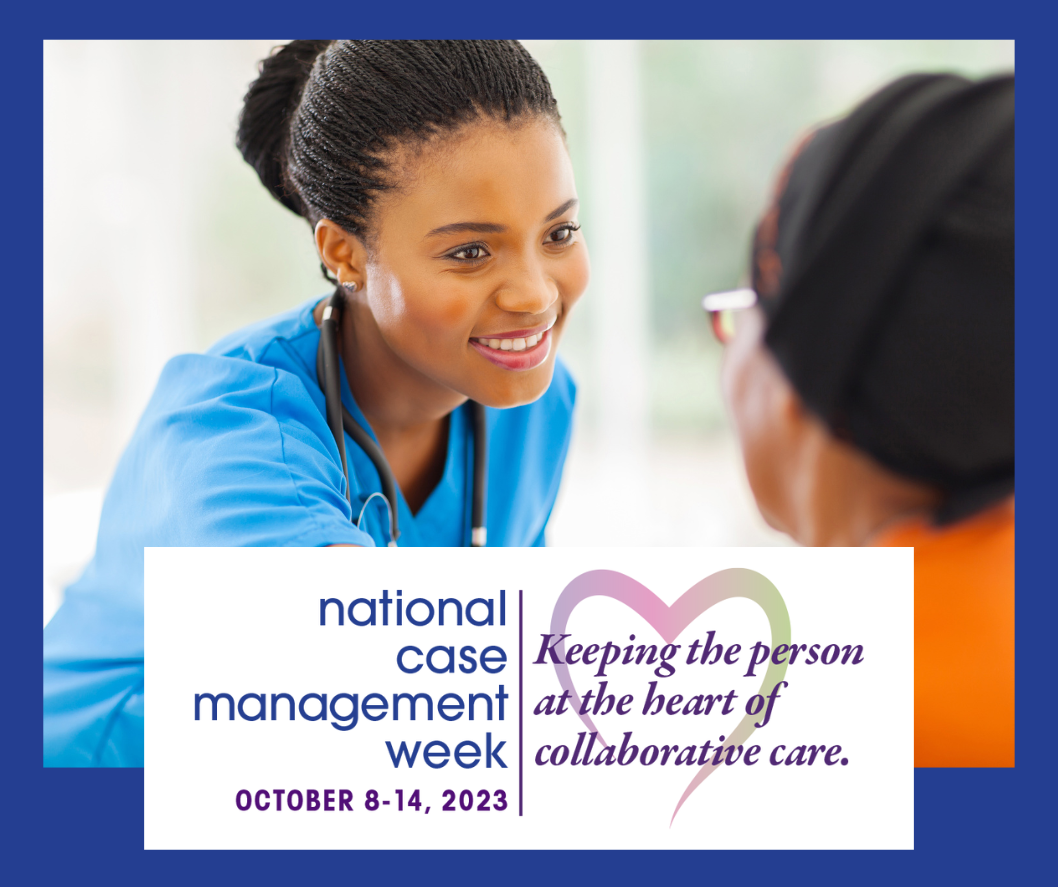
In recognition of National Case Management Week 2023, taking place from October 8th to 14th, the Commission for Case Manager Certification (CCMC) is emphasizing the pivotal role case managers play in championing collaborative care, all while keeping the individual's well-being central to their efforts. This year's theme resonates as "Keeping the Person at the Heart of Collaborative Care." Participate to Win $200 in Prizes The details of the contest are as follows: 4 winners - $200 Total Prizes CCMC will offer $50 VISA e-git cards to 4 lucky winners Contest ends October 30, 2023 How to Participate: To participate, answer the following questions (1 or all) for a chance to win a share of $200 in total prizes. Post your answers in the comment section below. Question Options: What is the most important thing you do as a case manager to show those you serve that they are at the center of care? What three things should you always keep top of mind when guiding clients through the current healthcare system? In a few words, tell us how today's case manager can become a change agent within their organization. What three characteristics do you think are most valuable for those considering a career in case management? About our Sponsor The Commission for Case Manager Certification is the first and largest nationally accredited case management certification organization, credentialing more than 50,000 professional case managers and disability management specialists.
-
In honor of National Case Management Week 2024 (Oct. 13-19), the Commission for Case Manager Certification (CCMC) is highlighting the great work you passionately do, putting your patients first. To show their gratitude, the Commission is sponsoring a contest for nurse case managers. The three contest questions are: What are some innovative ways you've found to encourage your clients to be more engaged in their health care? What are three ways you encourage your team members to stay motivated and passionate about their work? How do you see the future of case management evolving, and in what way have you been professionally empowered to bring about change? CCMC will offer $50 VISA e-gift cards to 4 lucky winners for $200.00 in total prizes. Contest ends October 30, 2024. How to participate: Click here to submit your answers and enter to win! About our Sponsor The Commission for Case Manager Certification is the first and largest nationally accredited case management certification organization, credentialing more than 50,000 professional case managers and disability management specialists.
-
Socioeconomic Factors Affect Clients’ Ability To Manage Their Health As experts in securing health and social services, case managers and disability management specialists understand their clients’ needs and how to help them access assistance, even when doing so proves difficult. The Commission for Case Manager Certification celebrates differences across demographics and characteristics that make each person unique. Case managers and disability management specialists who understand the diverse array of clients they serve strengthen their support and improve outcomes. People in historically marginalized racial and ethnic groups face inequities in health outcomes, access to primary care2, behavioral health care3, and dental care.4 Knowledge of this evidence can help case managers and disability management specialists better advocate for and serve their clients. We value diversity in our case manager and disability management specialist workforce, as it enables clients to work with experts who better understand their circumstances. For instance, a Latina case manager might be a strong match for a client new to this country, who needs Spanish language translation assistance and help understanding American culture. A diverse workforce can also help address health disparities, particularly when practitioners share common cultural experiences with clients by keeping that perspective in mind. For example, case managers are distinctly positioned to address inequities by ensuring clients get access to needed care. Health equity data—which showcases specific, measurable differences in health outcomes—improves care by offering detailed information about these inequities. Case managers can advocate for clients they see encountering such inequities in their daily work. To further inform the case management and disability management workforce, we recently hosted a webinar with the Commonwealth Fund, “Health Equity: Access-to-care data helps us understand racial and ethnic disparities.” The Commonwealth Fund promotes improved healthcare access for all and recently Case managers are likely well-acquainted with the impact of health inequities on their work. The United States population is diverse, and recent research showcases disparities in access to health care and health outcomes. Socioeconomic factors affect clients’ ability to manage their health. As experts in securing health and social services, case managers and disability management specialists understand their clients’ needs and how to help them access assistance, even when doing so proves difficult. The Commission for Case Manager Certification celebrates differences across demographics and characteristics that make each person unique. Case managers and disability management specialists who understand the diverse array of clients they serve strengthen their support and improve outcomes. People in historically marginalized racial and ethnic groups face inequities in health outcomes, access to primary care, behavioral health care, and dental care. Knowledge of this evidence can help case managers and disability management specialists better advocate for and serve their clients. We value diversity in our case manager and disability management specialist workforce, as it enables clients to work with experts who better understand their circumstances. For instance, a Latina case manager might be a strong match for a client new to this country, who needs Spanish language translation assistance and help understanding American culture. A diverse workforce can also help address health disparities, particularly when practitioners share common cultural experiences with clients by keeping that perspective in mind. For example, case managers are distinctly positioned to address inequities by ensuring clients get access to needed care. Health equity data—which showcases specific, measurable differences in health outcomes—improves care by offering detailed information about these inequities. Case managers can advocate for clients they see encountering such inequities in their daily work. To further inform the case management and disability management workforce, we recently hosted a webinar with the Commonwealth Fund, “Health Equity: Access-to-care data helps us understand racial and ethnic disparities.” The Commonwealth Fund promotes improved healthcare access for all and recently released a scorecard on health equity: “Achieving Racial and Ethnic Equity in U.S. Health Care: A Scorecard of State Performance.”5 The webinar explores important findings from this scorecard and provides insights into what they mean for case managers. Among these findings: In each U.S. state, health care systems do not adequately address the needs of people of color, while white residents in nearly every state experience stronger health care system performance6. Black and Asian American, Hawaiian, and Pacific Islander (AANHPI) people tend to face poorer health outcomes, including earlier deaths from preventable diseases and higher maternal mortality rates, as well as less insurance access and lower use of primary care7. Case managers can help address disparities by encouraging risk-reduction measures and helping clients navigate the health system while understanding barriers to access. The Commonwealth Fund scorecard also examines the following dimensions of these inequities: affordable access, health care quality and use, as well as health outcomes. Affordable Access Economic inequities and the racial wealth gap also drive health care disparities. Affordable health care access is a crucial factor determined by whether clients have insurance coverage and a regular health care provider. Additionally, these economic considerations also may include whether clients avoid seeking care due to cost concerns and large portions of their income being potentially spent on health expenses. The health equity scorecard uncovered that white populations have more access to care than people of all other races. Although the expansion of the Affordable Care Act has improved coverage gaps, uninsured rates remain high among certain groups. Available insurance coverage contributes heavily to access to care by reducing financial risk. In addition, predominantly Black or Latinx neighborhoods are less likely to have primary care providers, and variations in providers’ acceptance of different insurance options can create additional barriers to affordable care access. Health Care Quality and Use It’s essential to determine whether clients receive high-quality care and necessary services to prevent future health problems and manage chronic conditions, as well as how often they use costly settings such as emergency departments when primary care would suffice. Black, Latinx/Hispanic and AANHPI people have comparatively lower use of primary care than white people, who receive better overall care. 7 Primary care access improves health outcomes, and thus greater access and quality for these groups should be a priority. Recommending the right service, care and provider matters. For instance, cancer is often diagnosed later for Black adults, but regardless of the diagnosis stage, they experience lower five-year survival rates than do white adults, indicating critical inequities in quality of care8. Health Outcomes Health outcomes gauge earlier deaths from treatable and/or preventable causes, as well as the prevalence of risky behaviors or conditions (e.g., smoking or obesity). Health outcomes are also measured by mortality rates and prevalence of health problems. In most states, they are worse for Black and AANHPI people than white and Latinx/Hispanic populations9. In most states, white people are less likely to die of preventable causes than Black people. The Commonwealth Fund’s scorecard dives into a metric called mortality amenable to health care, referring to deaths prior to age 75 due to treatable causes such as diabetes. This rate is higher among Black people (and sometimes even double) the overall rate among U.S. adults. This can be attributed to lower treatment rates and various missed points of potential intervention throughout the care process, including differences in prescribed medications and procedures. Patient Journeys: How Case Managers Can Help Navigate This data may seem disheartening, but case managers and disability management specialists can play a fundamental role in improving care access and outcomes. For example, many obstacles in the U.S. health care system are administrative—selecting insurance, finding the right provider who takes one’s insurance, and understanding prior authorizations. Case managers and disability management specialists can help clients surpass these hurdles while keeping potential disparities in mind. Case managers and disability management specialists must recognize their own implicit biases that may affect clients. This requires thinking through and acknowledging any underlying associations one’s mind may make relating to a client’s age, appearance, disability, ethnicity, gender identity, location, nationality, professional level, race, religion, sexual orientation, and/or socioeconomic status. Everyone has implicit biases, and fostering awareness of potentially harmful ones makes all the difference. Challenging personal thought processes can bolster client support, foster empathy and improve outcomes. It’s crucial to remember that external social determinants of health may limit clients’ access to transportation, healthy food, social services, and language translation. Case managers and disability management specialists are uniquely positioned to recognize and address how these factors coincide and to navigate the system to benefit each individual client. For example, case managers can keep in mind external hurdles while connecting clients with care providers, ensuring access to preventive services, and helping them overcome administrative barriers. I’d like to take a moment to commend the case managers and disability management specialists who regularly confront health inequities in their work. I encourage you to learn more about his important data from the Commonwealth Fund to further inform and propel efforts to ensure everyone gets the care they need. To view the free webinar, click here. References 1 David C. Radley et al., Achieving Racial and Ethnic Equity in U.S. Health Care: A Scorecard of State Performance (Commonwealth Fund, Nov. 2021). 2 Arnett MJ, Thorpe RJ Jr, Gaskin DJ, Bowie JV, LaVeist TA. Race, Medical Mistrust, and Segregation in Primary Care as Usual Source of Care: Findings from the Exploring Health Disparities in Integrated Communities Study. J Urban Health. 2016 Jun;93(3):456-67. doi: 10.1007/s11524-016-0054-9. PMID: 27193595; PMCID: PMC4899337. 3 Behavioral Health Equity Report 2021. Substance Abuse and Mental Health Services Administration, 2021. 4 Han C. Oral health disparities: Racial, language and nativity effects. 5, 6, 7, 8 David C. Radley et al., Achieving Racial and Ethnic Equity in U.S. Health Care: A Scorecard of State Performance (Commonwealth Fund, Nov. 2021).
-
In honor of National Case Management Week 2022 (Oct. 9-15), the Commission for Case Manager Certification (CCMC) is highlighting the great work you passionately do, putting your patients first. To show their gratitude, CCMC is sponsoring a contest for nurse case managers. 4 winners - $200.00 Total Prizes CCMC will offer $50 VISA e-gift cards to 4 lucky winners Contest ends October 30, 2022 How to Participate To participate, answer the following 2 questions (1 or both) for a chance to win a share of $200 in total prizes! What are some things you do to give yourself time to think and breathe? What do you think is the most important attribute of today's professional case manager? Post your answers in the comment section below. About our sponsor The Commission for Case Manager Certification is the first and largest nationally accredited case management certification organization, credentialing more than 50,000 professional case managers and disability management specialists.

.thumb.png.920d8c5d5f37adbd2d5838a20cf3a4d1.png)