




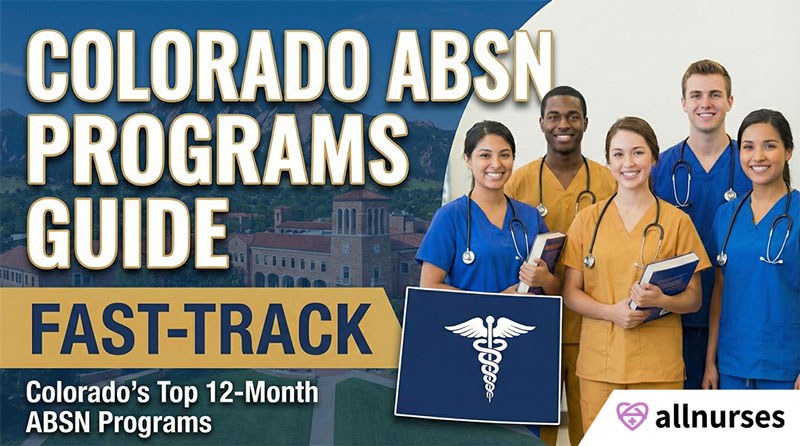
Colorado continues to experience a robust demand for healthcare professionals, making 2026 an ideal year to transition into the field. For individuals who already possess a bachelor's degree in a non-nursing discipline, an Accelerated Bachelor of Science in Nursing (ABSN) is the most efficient route to licensure. These intensive programs compress a traditional four-year degree into 12 to 20 months.
According to the American Association of Colleges of Nursing (AACN), accelerated programs are growing in popularity due to high employer demand for BSN-prepared nurses. Colorado is also a Nurse Licensure Compact (NLC) state, meaning your license here allows you to practice in over 35 other member states, significantly expanding your career mobility.
If you are looking for the fastest or most cost-effective route, here is a snapshot of the top contenders for 2026:
- Fastest Public Program: University of Colorado, Anschutz Medical Campus (12 Months)
- Best for Working Students: University of Northern Colorado (20 Months)
- Top Private Option: Regis University (12 Months)
- Southern Colorado Choice: University of Colorado, Colorado Springs (16 Months)
Our ranking methodology combines current data from the U.S. Department of Education, NCLEX-RN pass rates, and verified student feedback from the allnurses community.
1. University of Colorado, Anschutz Medical Campus
Location: Denver/Aurora, Colorado allnurses School Ranking: B+ (89)
The University of Colorado Anschutz Medical Campus (UCAMC) College of Nursing offers a premier Accelerated BSN (UCAN) program. This is a high-intensity, full-time program designed to be completed in exactly 12 months. It is widely recognized for its proximity to world-class medical facilities, including Children's Hospital Colorado and UCHealth University of Colorado Hospital.
Students have access to 2,000 square feet of advanced simulation space to practice skills before entering clinical environments. Due to the rigorous pace, faculty strongly advise against working while enrolled.
- ABSN Program: Official UCAN Accelerated BSN
- Program Format: On-Campus
- Tuition: ~$40,062 (In-State Est.)
- RN Pass Rate: 95%
- Program Length: 12 Months
Why it stands out: It provides the fastest route to licensure at a public university price point, with clinical placements in Level I Trauma Centers.
View University of Colorado, Anschutz Medical Campus School Profile
2. University of Colorado, Colorado Springs
Location: Colorado Springs, Colorado allnurses School Ranking: B+ (88)
The Helen and Arthur E. Johnson Beth-El College of Nursing at UCCS offers a slightly longer track than its Denver counterpart, clocking in at 16 months (4 semesters). This pace allows for slightly better absorption of material while still being accelerated. The program is ideal for students located in the Pikes Peak region.
A unique feature is the flexibility in admission pathways; they accept students with a non-nursing bachelor's degree or those with 57 specific undergraduate credits.
- ABSN Program: Official UCCS Accelerated BSN
- Program Format: On-Campus
- Tuition: ~$35,700 (In-State Est.)
- RN Pass Rate: 97%
- Program Length: 16 Months
Why it stands out: High NCLEX pass rates and a moderate pace make it a balanced choice for students in Southern Colorado.
View University of Colorado, Colorado Springs School Profile
3. University of Northern Colorado
Location: Greeley, Colorado allnurses School Ranking: B+ (86)
UNC offers a 20-month "Second Degree" BSN option. While longer than the 12-month sprints offered by competitors, this duration can be advantageous for students who need more time to digest complex medical concepts or have family obligations. The curriculum is a blend of online didactic coursework and face-to-face clinicals in the Greeley and Northern Colorado area.
- ABSN Program: Official UNC Second Degree BSN
- Program Format: Hybrid (Online Coursework / On-Campus Clinicals)
- Tuition: ~$33,796 (In-State Est.)
- RN Pass Rate: 96%
- Program Length: 20 Months
Why it stands out: The 5-term structure reduces burnout risk and offers a lower cost-per-credit average compared to private options.
View University of Northern Colorado School Profile
4. Regis University
Location: Denver, Colorado allnurses School Ranking: B (85)
Regis University is a private Jesuit institution offering a highly respected 12-month ABSN. The program is famous for its "INTRA-semester" format, where students take one or two classes at a time in intense blocks. This immersion style helps students focus deeply on specific subjects like Pharmacology or Pathophysiology.
The program includes 750 hours of clinical education, ensuring graduates are workforce-ready. As a private university, tuition is higher, but clinical placement support is robust.
- ABSN Program: Official Regis University Accelerated BSN
- Program Format: On-Campus
- Tuition: ~$38,336 (Est.)
- RN Pass Rate: 100%
- Program Length: 12 Months
Why it stands out: Consistent 100% NCLEX pass rates in recent years and the focused block-schedule learning model.
View Regis University School Profile
Admission to Colorado ABSN programs is competitive. While specific requirements vary by school, the general criteria for the 2026 academic year include:
- Bachelor's Degree: Must be from a regionally accredited institution.
- GPA: A minimum cumulative GPA of 3.0 is standard. Competitive applicants often have GPAs of 3.5 or higher.
-
Prerequisite Courses:
- Anatomy & Physiology I and II (with labs)
- Microbiology (with lab)
- General Chemistry
- Statistics
- Human Nutrition
- Developmental Psychology
- Entrance Exams: Some schools may require the TEAS or HESI A2 exam.
- Certifications: CPR/BLS certification for healthcare providers (American Heart Association) is typically required prior to clinical start dates.
The financial investment for an ABSN in Colorado ranges significantly based on residency status and institution type.
- Public Universities (In-State): Expect to pay between $35,000 and $45,000 for the total program.
- Private Universities: Tuition can range from $50,000 to $80,000+, though merit scholarships are often available.
Financial Aid Note: Because ABSN students already hold a bachelor's degree, they are no longer eligible for Federal Pell Grants. However, students may still qualify for federal student loans. Colorado also offers specific loan repayment programs for nurses willing to work in designated rural or health professional shortage areas (HPSAs).
Colorado offers competitive compensation for Registered Nurses, particularly in the Denver metro area.
- Mean Hourly Wage: ~$49.00
- Mean Annual Wage: ~$102,263
- Top Earners (90th Percentile): $135,000+
Regional Variance: Salaries in urban centers like Denver, Boulder, and Colorado Springs are generally higher to offset the cost of living. Rural positions in the Western Slope or Eastern Plains may offer lower base pay but often include aggressive signing bonuses and loan forgiveness incentives.
Frequently Asked Questions (FAQ)
Is Colorado a Nurse Licensure Compact (NLC) state?
Yes. Colorado is a member of the Nurse Licensure Compact. Graduates who pass the NCLEX-RN and meet residency requirements can obtain a multistate license, allowing them to practice in over 35 other compact states without obtaining additional licenses.
Can I complete an ABSN program in Colorado entirely online?
No. While didactic (classroom) portions may be offered online—such as the program at UNC—all accredited nursing programs in Colorado require in-person clinical rotations and lab skills training. You must be physically present in the state to complete these requirements.
How hard is it to get into a Colorado ABSN program?
It is competitive. Programs like CU Anschutz and Regis often receive far more applications than they have seats. A high GPA in prerequisite science courses (Anatomy, Physiology, Micro) is the most critical factor for admission.
Do I need to take the GRE for an ABSN?
Generally, no. The GRE is typically reserved for MSN (Master's) or DNP (Doctorate) programs. However, many ABSN programs require the TEAS (Test of Essential Academic Skills) or HESI exam.
What is the fastest nursing program in Colorado?
The 12-month tracks at the University of Colorado Anschutz Medical Campus and Regis University are currently the fastest routes to BSN licensure in the state.
What are the clinical training requirements for Colorado ABSN programs?
Colorado ABSN programs include extensive hands-on clinical training in hospitals, outpatient clinics, and community health settings. While the total number of clinical hours varies by program and state licensure requirements.
Can I work while completing a Colorado ABSN program?
Due to the fast-paced nature of ABSN programs, full-time work is discouraged. Students may be able to manage limited part-time hours, but faculty generally recommend focusing on coursework and clinicals.
What are the career outcomes for ABSN graduates in Colorado?
After earning an ABSN and passing the NCLEX-RN exam, graduates are eligible to work as registered nurses in hospitals, outpatient care, and public health settings. Many continue into advanced roles like nurse practitioner, educator, or nurse leader.