




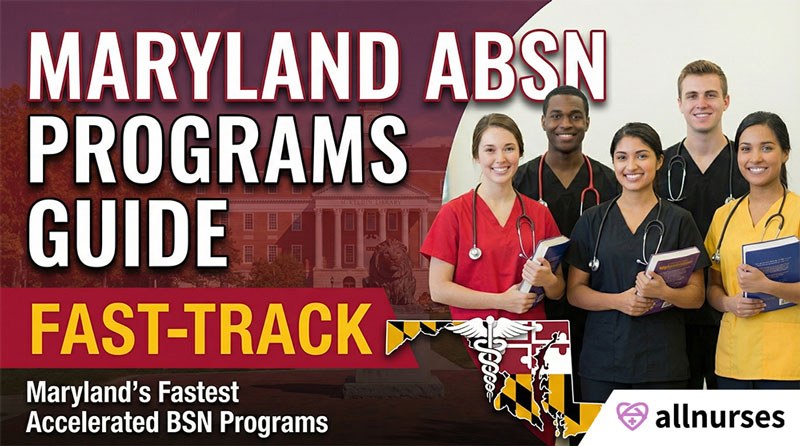
Maryland offers a robust healthcare environment, home to world-renowned institutions like Johns Hopkins and the University of Maryland Medical System. For individuals holding a non-nursing bachelor's degree, Accelerated BSN (ABSN) programs in Maryland provide a fast-track route to entering this dynamic workforce.
These programs are rigorous, condensing traditional nursing education into 12 to 16 months. They combine intensive didactic coursework with clinical rotations at top-tier facilities in Baltimore, Salisbury, and the DC metro area.
According to the Maryland Board of Nursing, demand for BSN-prepared nurses continues to rise to meet complex patient needs in 2026. These programs combine intensive didactic coursework with clinical rotations at top-tier facilities, allowing students to transition into the workforce in as little as 12 to 16 months.
If you are looking for specific features, here is a quick breakdown of the top contenders:
- Fastest Route to RN: Salisbury University (12 Months)
- Best for Flexibility (Hybrid): Notre Dame of Maryland University
- Most Affordable Option: Coppin State University
Our ranking methodology blends data from the U.S. Department of Education, the Maryland Board of Nursing (MBON), and insights from the allnurses community to bring you the top programs for 2026.
1. Notre Dame of Maryland University
Location: Baltimore, MD
allnurses School Ranking: B+ / 88
Notre Dame of Maryland University (NDMU) offers a highly distinct ABSN program that caters to students needing flexibility. NDMU provides both a hybrid online format and a traditional on-campus format. The hybrid option allows students to complete theory coursework remotely while attending on-site residencies for hands-on skills labs. Clinical rotations are held at prominent healthcare facilities throughout the Baltimore area.
- Program Format: Hybrid or On-Campus
- Tuition: ~$58,520 (Total Program Cost)
- RN Pass Rate: 95%
- Program Length: 15 Months
Why it stands out: The high NCLEX pass rate combined with the flexibility of a hybrid learning model makes this a top choice for students who are disciplined self-starters.
View [Notre Dame of Maryland University] School Profile: allnurses School Profile
2. Coppin State University
Location: Baltimore, MD
allnurses School Ranking: B+ / 88
Coppin State University, a Historically Black College and University (HBCU), offers an accelerated pathway known for its comprehensive curriculum. The program goes beyond basic clinical skills, emphasizing leadership, health equity, and disease prevention in urban settings. It is an intensive program designed to be completed in roughly 16 months of full-time study.
- Program Format: On-Campus
- Tuition: ~$11,935
- RN Pass Rate: 85%
- Program Length: 16 Months
Why it stands out: Coppin State offers exceptional value with one of the most competitive tuition rates in the region, making a nursing career accessible without a massive debt burden.
View Coppin State University School Profile
3. Salisbury University
Location: Salisbury, MD
allnurses School Ranking: B+ / 88
Salisbury University's Second Degree BSN is ideal for students who want to enter the workforce as quickly as possible. Located on Maryland's Eastern Shore, this program requires fewer prerequisites than many competitors and boasts the shortest completion time on our list.
- Program Format: On-Campus
- Tuition: ~$14,388
- RN Pass Rate: 87%
- Program Length: 12 Months
Why it stands out: The 12-month timeline is the fastest in the state, allowing for a quicker entry into the workforce.
View Salisbury University School Profile
2026 School Comparison Table
| School | Length | In-State Tuition (Est) | Format | NCLEX Rate |
|---|---|---|---|---|
| Salisbury University | 12 Months | ~$14,388 | On-Campus | 87% |
| Coppin State | 16 Months | ~$11,935 | On-Campus | 85% |
| Notre Dame of MD | 15 Months | ~$58,520 | Hybrid/Campus | 95% |
Note: Tuition figures are estimates based on 2025-2026 data and exclude fees, books, and living expenses.
What Is an ABSN Program?
An Accelerated Bachelor of Science in Nursing (ABSN) is a fast-paced "second degree" program. It is specifically designed for students who already hold a bachelor's degree in a non-nursing field (e.g., Psychology, Biology, Marketing).
Because you have already completed your general education requirements (English, History, etc.), the ABSN curriculum focuses strictly on nursing science and clinical practice.
Key Components of Maryland Programs
- Foundational Sciences: Advanced pathophysiology, pharmacology, and microbiology.
- Specialized Nursing: Pediatrics, mental health, obstetrics, and critical care.
- Leadership: Evidence-based practice and healthcare ethics.
ABSN Clinical Training in Maryland
Clinical rotations are the backbone of your nursing education. In Maryland, students benefit from a rich healthcare ecosystem. ABSN students cannot complete clinicals online; they must be done in person.
Common Clinical Sites may include:
- Johns Hopkins Hospital
- University of Maryland Medical Center (UMMC)
- MedStar Health Facilities
- Mercy Medical Center
- Peninsula Regional Medical Center (for Eastern Shore students)
Admissions for 2026 cohorts are competitive. While requirements vary by school, most Maryland ABSN programs adhere to the following standards:
Academic Criteria
- Degree: A conferred non-nursing bachelor's degree from an accredited institution.
- GPA: Minimum cumulative GPA of 3.0 (though competitive applicants often have 3.4+).
- Entrance Exams: TEAS or HESI A2 scores are frequently required.
Prerequisite Coursework
You must complete specific science and math courses before starting the program.
- Science: Anatomy & Physiology I & II (with lab), Microbiology, Chemistry.
- Other: Statistics, Developmental Psychology, Ethics, Nutrition.
Pro Tip: Check if your chosen school requires these courses to be completed within the last 5 or 10 years.
The cost of ABSN programs in Maryland varies significantly between public universities (Coppin State, Salisbury) and private institutions (Notre Dame of MD).
- Public (In-State): $12,000 - $16,000 total tuition.
- Private: $50,000 - $65,000 total tuition.
Hidden Costs to Budget For:
- Uniforms and Scrubs: $200+
- Clinical Equipment (Stethoscope, etc.): $150+
- Background Checks & Drug Screens: $150
- NCLEX & Licensure Fees: $300+
Maryland is a lucrative state for Registered Nurses, often paying above the national average due to the high cost of living in the DC/Baltimore corridor.
Bureau of Labor Statistics (BLS) Data for RNs:
- Mean Hourly Wage: $47.32
- Mean Annual Wage: $98,430
BSN vs. ADN Salary Gap: While the BLS does not separate data by degree type, hospitals in Maryland (especially Magnet-designated facilities) often offer higher starting hourly rates for BSN-prepared nurses.
- Estimated BSN Average: ~$102,263/year
- Estimated ADN Average: ~$80,321/year
Ensure your chosen program is accredited by the CCNE (Commission on Collegiate Nursing Education) or ACEN (Accreditation Commission for Education in Nursing).
Accreditation guarantees:
- Licensure Eligibility: You cannot sit for the NCLEX-RN without graduating from a state-board-approved and accredited program.
- Financial Aid: Federal loans are generally only available for accredited programs.
- Graduate School: If you plan to become a Nurse Practitioner (NP) or CRNA later, you must have an accredited BSN.
Frequently Asked Questions (FAQ)
Is Maryland a Nursing Compact (eNLC) State?
Yes, Maryland is part of the Enhanced Nursing Licensure Compact (eNLC). This means that once you pass the NCLEX and receive your Maryland multistate license, you can practice in over 35 other compact states (including neighboring Virginia and Delaware) without obtaining additional licenses.
How competitive are ABSN programs in Maryland?
They are highly competitive due to the limited number of seats and the high density of pre-med and health science students in the region. A GPA above 3.0 is the minimum, but a 3.5+ is recommended for top programs.
Can I work while completing an ABSN in Maryland?
It is strongly discouraged. ABSN programs are effectively full-time jobs, requiring 40-60 hours per week of class, study, and clinical time. Working even part-time can jeopardize your grades and ability to pass.
What if I don't get into an ABSN program?
If you are waitlisted, consider looking at "Direct Entry MSN" programs (Master's level) which are popular in Maryland, or traditional BSN transfer options, though these take longer to complete.
What are the career outcomes for ABSN graduates in Maryland?
After earning an ABSN and passing the NCLEX-RN exam, graduates are eligible to work as registered nurses in hospitals, outpatient care, and public health settings. Many continue into advanced roles like nurse practitioner, educator, or nurse leader.